
Who Are the Top Retrofit Windows Manufacturers in China?
Replacing existing windows is rarely a simple swap. Wall openings, frame depth, drainage paths, and interior trim can complicate installation. Retrofit windows are designed to fit within or adapt to existing openings, but the right system depends on the building and project scope. A product that looks suitable in a brochure may still need careful checks for dimensions, hardware, glazing, sealing, and finish. Small gaps matter. Measure twice.
This guide explores leading retrofit windows manufacturers in China and the factors buyers can use to assess them. A factory’s size or polished website alone does not prove product performance. Instead, consider product range, customization, documented testing, quality-control practices, project references, communication, and after-sales support. Ask for current technical data and clarify who handles sampling, packing, and installation guidance. Details matter. Where public information is limited, that uncertainty should be stated rather than replaced with assumptions. The right shortlist will vary by climate, building type, budget, and project requirements. A manufacturer experienced with one profile system may not suit every renovation. Use the comparisons as a starting point, verify specifications directly, and request samples where practical. This is a useful step, not a guarantee.
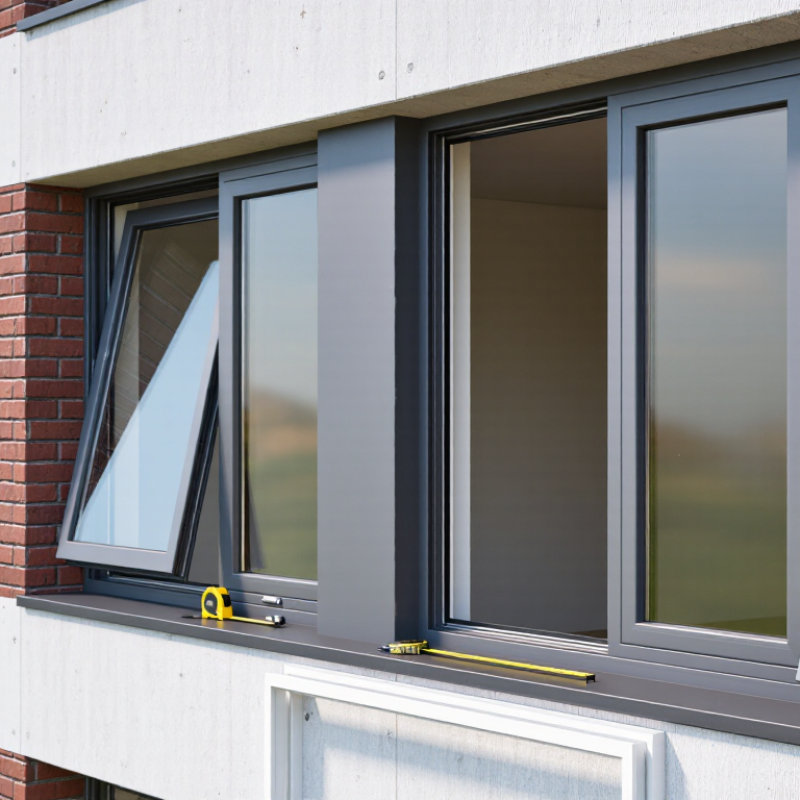
What Retrofit Windows Are and How They Differ from Replacement Windows
A retrofit window is fitted into an existing window frame, rather than removing the frame and rebuilding the opening. The installer measures the opening, then secures the new unit within the old frame. Interior trim and exterior siding often stay in place. Less mess. The work can be quicker, too.
A full-frame replacement removes the old window and frame down to the rough opening. This gives the installer access to the sill, flashing, and surrounding structure. It can reveal hidden water damage, but may require new trim or siding repairs. Retrofit work usually preserves more of the existing finish, though it also depends on that frame being sound.
Look closely at the old frame before choosing. Soft wood near the sill, stains beneath the window, or a sash that will not stay open may signal deeper problems. A new unit cannot fix a damaged opening. That detail is easy to miss. When the frame is dry, square, and firmly attached, retrofit installation may be a practical option. Still, measurements and site conditions matter; a slightly uneven opening can complicate fitting and sealing. Ask the installer how they will check drainage and seal the perimeter, not only how quickly the window can be installed.
Who Are the Top Retrofit Windows Manufacturers in China? - What Retrofit Windows Are and How They Differ from Replacement Windows
| Comparison area | Retrofit windows | Replacement windows | What to check when evaluating a manufacturer |
|---|---|---|---|
| Basic definition | A window system fitted into or over an existing window opening, commonly designed to retain at least part of the existing frame. | A new window installed after removing the existing window. The scope may involve the sash alone or the frame as well. | Ask for the installation detail and confirm exactly which existing components remain. |
| Existing frame | The existing frame is typically retained, so it should be sound, stable, and suitable for the proposed installation. | A full-frame replacement removes the old frame; some replacement projects only remove the sash and retain the frame. | Request guidance on frame inspection, opening measurements, and conditions that require full-frame replacement. |
| Opening size and glass area | An insert or overlay can reduce the clear opening or glass area, depending on the design and the existing frame. | Removing the frame can allow more of the rough opening to be used, though the final result depends on the installation design. | Compare dimensioned drawings showing the finished opening, sightlines, and glass area. |
| Installation and disruption | Because the existing frame is commonly retained, installation may require less removal of surrounding finishes; actual work depends on site conditions. | Full-frame work involves removing more of the existing assembly and may require additional work around the opening. | Check whether the quoted scope includes removal, disposal, sealing, flashing, and interior or exterior finish work. |
| Water and air management | The new window depends partly on the condition of the retained frame and on correct sealing between the new unit and that frame. | A full-frame installation can expose the opening for inspection and new perimeter sealing, but performance still depends on installation quality. | Ask for installation instructions and product test reports for air leakage and water penetration under the relevant test method. |
| Thermal and acoustic performance | Performance depends on the complete assembly, including glazing, frame, seals, and the retained frame and installation. | Performance likewise depends on the complete window assembly and installation; replacement alone does not guarantee a particular result. | Compare documented whole-window performance for the exact size, glazing, frame, and hardware configuration being quoted. |
| Materials and configuration | Retrofit systems can be made with different frame materials and glazing configurations; suitability depends on the opening and project requirements. | Replacement windows are also available in different materials, glazing types, and operating styles. | Verify the specified frame material, glass build-up, hardware, finish, and product drawings rather than relying on a generic product description. |
| Best-fit project conditions | May suit projects where the existing frame is in good condition and retaining it is part of the project plan. | May suit projects where the existing frame is damaged, unsuitable, or intended to be removed as part of the renovation. | Request a project-specific assessment; neither approach is appropriate for every opening. |
| Comparing manufacturers in China | There is no single product specification that makes one retrofit window suitable for every building or market. Product and installation requirements vary by project and destination. | Compare verified test documentation, quality-control procedures, customization capability, installation details, warranty terms, and experience with the intended export market. Confirm that certificates and reports apply to the exact product configuration. | |
Related Posts
-
How to Retrofit Windows in 2026?
-

Navigating Global Import Export Certifications for the Best Commercial Windows Buying Guide
-

China Top 10 Commercial Windows Suppliers in 2026?
-
Top Double Casement Window Manufacturers in China
-
Home Windows Tips for Better Energy Efficiency
-
What Are the Top 10 Types of Casement Windows?