
What Are the Top Types of Vinyl Replacement Windows in 2026?

Choosing vinyl replacement windows in 2026 means balancing energy performance, ventilation, appearance, and budget—not simply picking the lowest price. The U.S. Department of Energy estimates that windows account for 25%–30% of residential heating and cooling energy use. That makes frame quality, glass selection, and installation details worth examining closely. Details matter.

This guide compares popular vinyl replacement windows, including double-hung, casement, sliding, picture, and bay or bow styles. ENERGY STAR reports that certified windows, doors, and skylights can help households save an average of 12% on energy bills compared with non-certified products. Actual savings vary with climate, existing windows, and installation quality. The National Fenestration Rating Council (NFRC) label offers a practical way to compare rated U-factor and solar heat gain coefficient (SHGC) across products.

No single style suits every home. A double-hung window may be easy to clean, while a casement can open wide for ventilation; a fixed picture window does not open at all. Those trade-offs can be easy to overlook in showroom comparisons. There is no universal winner. The sections ahead explain how each type performs, what features to inspect, and which questions to ask before requesting quotes. This is a useful starting point, not a substitute for checking local conditions or the product’s current ratings.
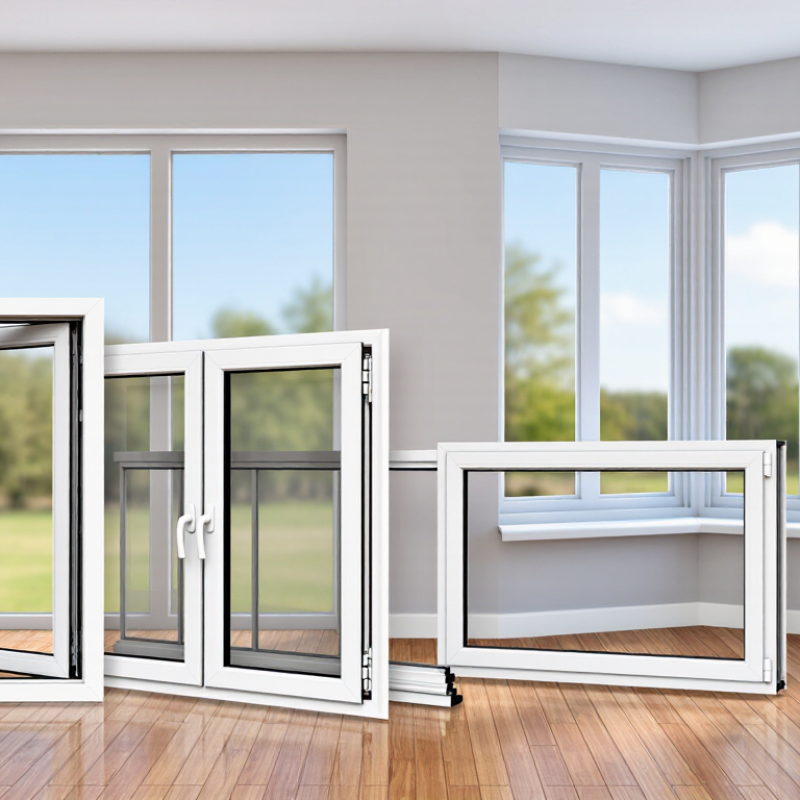
What Are the Top Types of Vinyl Replacement Windows in 2026?

Single-Hung and Double-Hung Vinyl Replacement Windows

What Are the Top Types of Vinyl Replacement Windows in 2026?

Single-Hung and Double-Hung Vinyl Replacement Windows

Single-hung and double-hung vinyl replacement windows use similar frames, but their sashes move differently. In a single-hung window, the upper sash stays fixed while the lower sash slides upward. In a double-hung window, both sashes move, allowing airflow from different heights. Tilt-in sashes can also make indoor cleaning easier. Check the model details. Not every double-hung sash tilts.

The U.S. Department of Energy’s Energy Saver estimates that heat gain and loss through windows account for about 25%–30% of residential heating and cooling energy use. Compare NFRC-certified U-factor and solar heat gain coefficient (SHGC) ratings, along with the exact glass package. A lower U-factor generally means less heat transfer; SHGC helps assess how much solar heat enters.

Vinyl needs little routine painting, but poor shimming or gaps can still cause drafts. Installation matters. I would not choose double-hung solely for ventilation: a tightly fitted single-hung may perform better than a poorly installed double-hung. Ask how the sill drains, and check that both sash locks engage smoothly.

Casement and Awning Vinyl Replacement Windows

Casement and awning vinyl replacement windows suit rooms where fresh air matters. A casement sash swings outward on side hinges, while an awning sash opens from the bottom. Both use a crank, which can make operation easier above a kitchen sink or counter. Their sash edges press against seals when closed, helping limit drafts when the window is properly fitted and adjusted.

Look closely at the opening before choosing either style. Casements need clear space outside for the sash, so nearby walkways, shrubs, or decks can affect usability. Awnings can admit air during light rain, but wind-driven rain may still enter. Small details count. Check that the crank feels smooth, the lock engages firmly, and the frame sits square in the opening. Vinyl can expand and contract with temperature changes, so careful installation and suitable clearances matter. A replacement window is not automatically an upgrade if the opening is out of square or the surrounding trim has hidden damage. Those conditions deserve inspection before ordering.

What Are the Top Types of Vinyl Replacement Windows in 2026? — Casement and Awning Vinyl Replacement Windows

Comparison Casement Vinyl Replacement Windows Awning Vinyl Replacement Windows
Hinge position and opening Hinged along one side; the sash swings outward, commonly operated with a crank. Hinged along the top; the sash swings outward from the bottom, commonly operated with a crank.
Typical ventilation Opens a large portion of the window area and can catch breezes from different directions. Provides ventilation through an outward-opening gap, while the raised sash can help deflect light rain.
Common locations Often used where an unobstructed opening and easy access to the operating hardware are desired, such as living rooms or bedrooms. Often installed in bathrooms, kitchens, basements, or above other windows where ventilation is useful.
Views and daylight A large unobstructed glass area can provide broad views; the open sash projects outside the frame. Can provide daylight and ventilation in a compact horizontal opening; the projecting sash may affect exterior clearance.
Rain and weather Should generally be closed during rain and strong winds. The outward-opening sash needs adequate exterior clearance. The top-hinged sash can offer some shelter during light rain, but it does not make the window weatherproof when open.
Sealing and efficiency When closed and properly installed, the sash presses against the frame. Overall energy performance depends on the complete window, glazing, seals, and installation. When closed and properly installed, the sash presses against the frame. Overall energy performance depends on the complete window, glazing, seals, and installation.
Operation and access Crank operation can make the sash straightforward to open; screen placement and cleaning access vary by design. Crank operation is common; consider reach and hardware location, especially when the window is installed above a counter or another window.
Planning considerations Check for nearby walkways, landscaping, shutters, and other obstructions that could interfere with the outward swing. Check the available opening height, exterior clearance, and whether the window can be reached comfortably for operation.
Vinyl-frame care Vinyl frames generally need no painting; routine cleaning and periodic inspection of hardware and weatherstripping are recommended. Vinyl frames generally need no painting; routine cleaning and periodic inspection of hardware and weatherstripping are recommended.
Best suited to Spaces where a wide opening, strong ventilation, and an unobstructed view are priorities, provided there is room for the sash to swing outward. Spaces needing ventilation in a shorter opening or where the top-hinged sash’s partial rain shelter is useful during light rain.

Note: Available sizes, operating hardware, glazing options, and performance ratings vary by product. Compare certified ratings and confirm that the selected window is suitable for the opening and local building requirements.

Sliding and Picture Vinyl Replacement Windows

Sliding vinyl replacement windows suit rooms where a sash that swings outward would crowd a walkway, patio, or counter. One panel glides sideways, leaving the sill clear for a plant pot or a hand reaching outside. The operation is simple. Check the track. Dust and grit can make movement rough, while worn rollers may cause a sash to drag. For wide openings, compare frame sightlines and glass area, not just listed dimensions. A slimmer-looking unit may admit more daylight, but actual glass area depends on the frame and configuration. Ask how the replacement will fit the existing opening; poor measurements can leave gaps that invite drafts or water.

Picture vinyl replacement windows have no moving sash, so they can offer an unobstructed view and fewer operating parts. They work well above a kitchen sink, beside a stair landing, or in a room needing steady daylight. No opening function. Pairing a picture unit with an operable window can provide ventilation, though the layout affects airflow and appearance. Check glass options, frame depth, and drainage details against the wall conditions. Installation matters as much as the unit: flashing must direct water outward, and insulation should fill the perimeter without distorting the frame. A common oversight is treating every opening as perfectly square. It rarely is. Have the installer verify diagonals and explain how uneven framing will be handled before ordering.

Top Vinyl Replacement Window Types in 2026: Sliding vs. Picture

Typical operable panels per window: A standard sliding window has one movable panel, while a picture window has none. Sliding configurations vary, and some models have two movable panels. Picture windows do not open, so they provide an unobstructed view but no direct ventilation.

Bay and Bow Vinyl Replacement Windows

Bay and bow vinyl replacement windows add depth that flat units cannot. A bay usually pairs a broad center window with angled side windows. A bow uses several units to form a softer curve. Both can create a bright reading nook, but they need careful measurement and solid structural support. It feels open. Yet the projection also exposes more frame and glass to weather.

Vinyl frames resist moisture and need little routine upkeep, making them practical for these larger assemblies. Still, vinyl alone does not determine energy performance. The U.S. Department of Energy’s Energy Saver guidance estimates that windows account for about 25–30% of residential heating and cooling energy use. That figure covers windows broadly, not bay and bow units specifically. Compare NFRC-certified U-factor and solar heat gain coefficient ratings for the exact configuration and climate.

For a sunny living room, low solar heat gain glass may help reduce summer heat; colder regions may benefit from different glazing choices. Ask how the installer will support the projecting frame, seal joints, and direct water away from the home. Those details matter. A deep seat can look inviting, but poor flashing or uneven support may lead to drafts or leaks. The fit deserves as much attention as the view.

FAQS

How do casement and awning windows open?

Casement sashes swing outward on side hinges. Awning sashes open from the bottom. Both use a crank.

Which window style works above a kitchen sink?

Casement and awning windows can be easier to crank above a sink or counter. Check that the handle feels smooth.

Can an awning window stay open in the rain?

It may admit air during light rain. Wind-driven rain can still enter, so it is not fully weatherproof.

What should I check before choosing a casement window?

Look for nearby decks, shrubs, or walkways. The outward-swinging sash needs clear space.

Are sliding windows useful beside a patio?

Yes. A sliding sash moves sideways and does not swing into the patio or walkway. Keep its track free of dust and grit.

Do picture windows open for ventilation?

No. They have no moving sash. Pair one with an operable window if you need fresh air.

What should I inspect before ordering replacement windows?

Check the opening’s measurements, frame condition, and squareness. Hidden trim damage can complicate installation.

Does careful installation matter as much as the window?

Yes. Flashing should direct water outward, and perimeter insulation should not distort the frame. I’d double-check those details.