
China Top 10 Educational Animal Specimen Suppliers
China’s educational specimen market is broad, but supplier quality can vary. A classroom collection should do more than look convincing. Clear identification, careful preservation, and useful learning notes matter just as much. A well-labeled specimen can help students notice wing structure, tooth shape, or the fine pattern of a shell. A vague label cannot.
Animal-behavior expert Jane Goodall once said, “What you do makes a difference, and you have to decide what kind of difference you want to make.” That reminder fits educational purchasing: responsible sourcing and accurate information deserve close attention. This guide introduces ten China-based educational animal specimen suppliers and the details buyers may want to compare, including product range, documentation, packing, and support for schools or museums. It is a starting point, not an endorsement. Ask suppliers about specimen origin, preservation methods, and the learning materials provided. Check that descriptions are specific and consistent. Small details count.
The phrase “Aniaml Specimen” appears in searches, though “Animal Specimen” is the standard spelling. Either way, the buyer’s questions should stay practical: What will students learn? How will the item be stored? Can its identity be verified? Not every listing will answer these well. That gap deserves reflection, not guesswork.
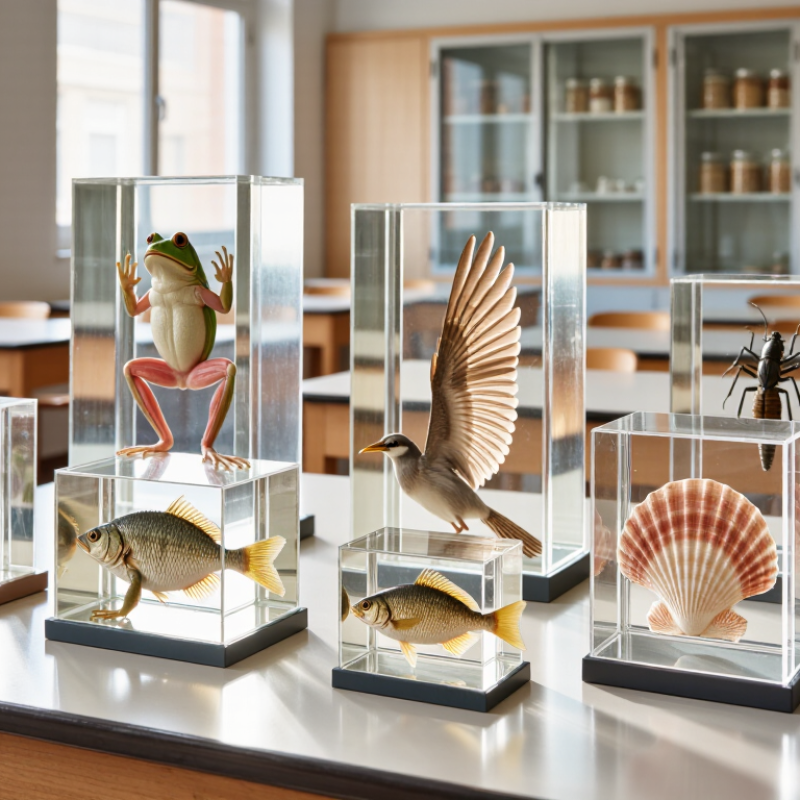
What Educational Animal Specimens Include and How They Support Learning
Educational animal specimens include articulated skeletons, skulls, study skins, casts, and prepared microscope slides. They help learners examine structures that pictures can flatten: tooth shapes, joint movement, feather patterns, or the curve of a rib. Comparing specimens can make lessons on classification, adaptation, and anatomy more concrete. Handling rules and clear labels matter, especially when students share delicate materials.
A specimen is not a lesson by itself. Teachers can ask learners to sketch a feature, compare two forms, and explain what the difference might do. Freeman et al.’s 2014 meta-analysis in Proceedings of the National Academy of Sciences reviewed 225 undergraduate STEM studies. Active learning improved examination performance by 0.47 standard deviations; lecture-taught students were 1.5 times more likely to fail. That evidence supports active participation, but it does not measure animal specimens alone.
Good specimen-based teaching also requires context. Include the species or group, the body part shown, and a note on how the material was prepared. Students should know what they can observe—and what the display cannot tell them. Details matter. A skull can reveal tooth form, but not an animal’s full behavior or habitat. Teachers may need to correct their own assumptions, too.
China Top 10 Educational Animal Specimen Suppliers - What Educational Animal Specimens Include and How They Support Learning
| Educational Specimen Type | What It Typically Includes | Learning Applications | Handling and Selection Considerations |
|---|---|---|---|
| Vertebrate skeletons | Cleaned bones, articulated skeletons, or selected skeletal elements from vertebrate animals. | Supports study of bone structure, vertebrate anatomy, locomotion, and comparisons among animal groups. | Check that bones are securely mounted and labelled. Use stable display supports and handle fragile elements carefully. |
| Skulls and dentition | Whole skulls or casts showing features such as jaws, teeth, eye sockets, and openings. | Helps learners compare feeding adaptations, tooth types, skull structure, and relationships between form and function. | Confirm whether an item is a real specimen or a replica. Verify its documented source and applicable wildlife-trade requirements. |
| Taxidermy mounts | Prepared animal skins mounted over a form, often arranged to show a species in a natural posture. | Provides a three-dimensional reference for external anatomy, body covering, coloration, and adaptations. | Keep in a dry, clean display area away from direct sunlight and pests. Ask about preparation methods and lawful sourcing. |
| Wet-preserved whole specimens | Whole animals preserved in a liquid within a sealed, labelled container. | Enables observation of body shape and external features; some specimens can support guided study of internal anatomy. | Check container seals, liquid condition, labels, and storage guidance. Students should not open containers unless supervised under appropriate safety procedures. |
| Preserved organs and anatomical specimens | Selected organs or body parts prepared for anatomical observation, sometimes supplied in sealed containers. | Supports lessons on organ structure, body systems, and the relationship between anatomy and physiological function. | Confirm preservation details and handling instructions. Use suitable protective equipment and follow institutional safety rules. |
| Pinned insect collections | Mounted insects arranged in display cases, commonly with labels identifying classification or collection details. | Useful for comparing insect body regions, wing types, legs, mouthparts, and visible variation among specimens. | Keep cases closed and dry; pinned specimens are delicate. Check that labels and identification information are supplied where needed. |
| Insect life-cycle collections | Examples of life stages such as eggs, larvae, pupae, and adults; some sets use preserved specimens or labelled images. | Illustrates development, metamorphosis, and differences between complete and incomplete metamorphosis. | Check which stages are actual specimens and which are models or images. Use accurate labels and avoid presenting a model as a real specimen. |
| Mollusk shells and exoskeletons | Cleaned shells or other hard external structures, sometimes arranged by form or habitat. | Supports observation of external structure, growth patterns, shape variation, and protective adaptations. | Inspect for sharp edges and provide context about the animal that produced each structure. Confirm legal sourcing for regulated species. |
| Feather, fur, and hair comparison sets | Labelled samples of feathers, fur, or hair, mounted on cards or included in an educational display. | Allows comparison of animal coverings and discussion of insulation, flight, camouflage, and other functions. | Ask whether samples are ethically and legally sourced. Store clean and dry, and consider allergy sensitivities during classroom use. |
| Animal microscope slides | Prepared slides containing animal tissues or other biological material, usually sealed beneath a coverslip. | Introduces microscopy and helps learners observe cells, tissues, and structures that are not visible to the unaided eye. | Check slide labels, magnification information, and coverslip condition. Handle by the edges and use appropriate microscope procedures. |