
China Top 10 Door Stopper Manufacturers for Global Buyers?
Choosing a Door Stopper manufacturer involves more than comparing unit prices. Buyers need to know what the product is made of, how it is finished, and whether its design suits the intended door and floor. A compact stainless-steel wall stop, for example, faces different installation and wear demands than a rubber wedge or magnetic floor model. Small details matter.
This guide introduces ten China-based manufacturers for global buyers to consider. It focuses on practical sourcing questions, including product range, customization, sample availability, quality checks, minimum order quantities, and communication. These factors can help importers, distributors, and project purchasers narrow a shortlist before requesting quotations. A supplier’s website or catalog is only a starting point; it cannot confirm production consistency or delivery performance by itself.
Ask for clear drawings, material specifications, finish options, and sample terms. Check whether the supplier can explain how products are inspected and packed, especially when finishes may scratch in transit. Then compare quoted lead times and included services, not just the headline price. A polished presentation can still leave important questions unanswered. That deserves attention.
The “top 10” label should be treated as a useful starting point, not a universal ranking. The best fit depends on your market, order volume, design needs, and tolerance for customization delays. Verify claims directly with each manufacturer, and keep written specifications for comparison. That extra step takes time. It can also prevent an attractive sample from becoming a disappointing bulk order.
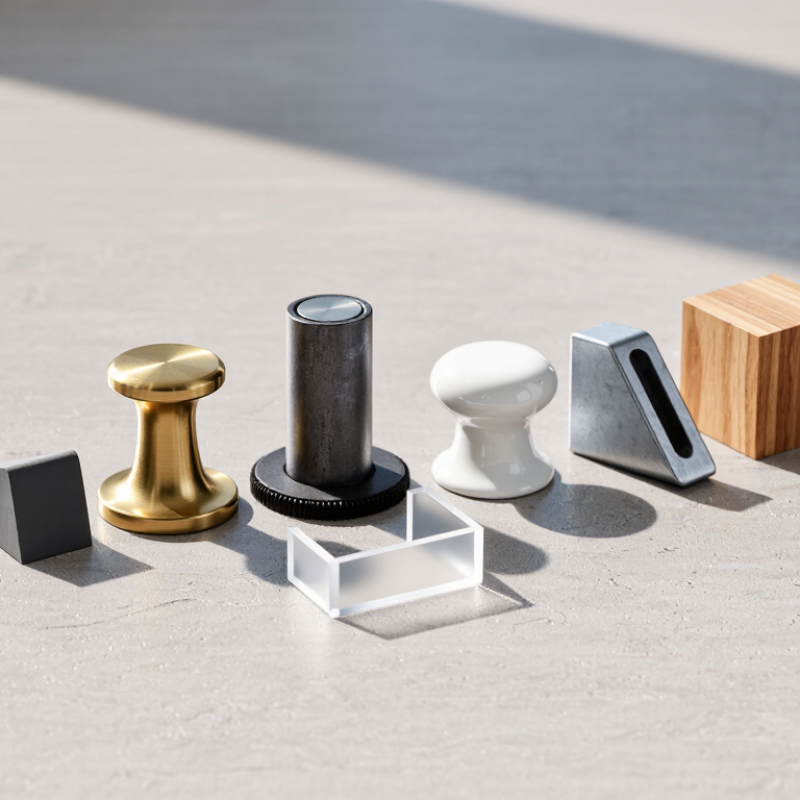
Door Stopper Types, Materials, and Common Applications
Door stoppers protect walls, handles, and nearby furniture from repeated impact. Floor-mounted models work well where a door swings to a fixed position. A rubber tip softens contact and can reduce the sharp knock of a heavy door. Wall-mounted stops suit rooms with clear wall space, while hinge-pin versions keep floors unobstructed. Magnetic stops can hold a door open, but their pull may feel weak on heavier doors.
Material affects both durability and feel. Stainless steel resists rust better than ordinary steel, making it a practical choice near damp entryways. Zinc alloy offers a solid finish for indoor use, though its coating may wear with frequent knocks. Rubber and silicone tips absorb impact and help prevent scratches. Small details matter. Check that replacement tips are available, since the stopper body may outlast its cushion.
Applications vary by door weight, floor type, and traffic. A compact rubber floor stop may suit a bedroom, while a busy office entrance often needs a firmly anchored metal model. On tile or concrete, installation usually differs from fitting a stop into timber flooring. Measure the swing path before choosing. A common oversight is selecting by appearance alone; even a neat stopper can fail if it sits outside the door’s actual travel. Real rooms are not always perfectly level, so installation may need adjustment.
China Top 10 Door Stopper Manufacturers for Global Buyers? - Door Stopper Types, Materials, and Common Applications
The table below compares ten common door stopper types for product selection. It describes product categories, not a ranked list of manufacturers.
| No. | Door Stopper Type | Common Materials | Installation or Operation | Common Applications | Buyer Considerations |
|---|---|---|---|---|---|
| 1 | Floor-mounted fixed stop | Stainless steel, zinc alloy, brass, rubber bumper | Secured to the floor with screws or an anchor; the bumper limits door travel. | Homes, offices, hotels, and other spaces with a suitable floor fixing point. | Check floor construction, fixing method, door clearance, and bumper position. |
| 2 | Wall-mounted stop | Stainless steel, aluminum, zinc alloy, rubber or silicone tip | Fixed to the wall where the door or handle would otherwise make contact. | Rooms where floor drilling is unsuitable or a wall offers a clear stopping point. | Confirm wall backing and position the stop to protect the door and wall finish. |
| 3 | Hinge-pin stop | Steel or stainless-steel pin, metal body, rubber contact tips | Fits onto a compatible door hinge pin; adjustable contact arms limit opening angle. | Interior hinged doors where a floor or wall-mounted fitting is not preferred. | Check hinge-pin diameter, hinge design, and the door’s required opening range. |
| 4 | Magnetic door stop or holder | Steel or stainless-steel body, magnet, metal strike plate | A magnet engages a matching plate on the door to hold it open; many models also cushion contact. | Offices, homes, and rooms where doors are often kept open temporarily. | Check holding force, alignment, release convenience, and mounting surface. |
| 5 | Kick-down door holder | Steel or stainless-steel body, rubber foot, spring mechanism | Mounted to the door; a foot is lowered by hand or foot to hold the door open. | Service areas, utility rooms, and doors that need occasional hands-free holding. | Review door weight, floor grip, clearance, and whether the foot suits the floor surface. |
| 6 | Portable wedge stop | Rubber, thermoplastic elastomer (TPE), silicone, or wood | Placed under the door edge; friction helps resist movement without permanent installation. | Temporary use in homes, hotels, classrooms, and maintenance settings. | Match wedge height and grip to the door-to-floor gap and floor material. |
| 7 | Spring door stop | Spring steel or stainless steel, metal base, rubber tip | A flexible coil is fixed to the wall or baseboard and deflects when contacted by the door. | Residential and light-duty interior doors where a compact, simple stop is needed. | Consider spring reach, mounting strength, and the potential for noise or repeated flexing. |
| 8 | Overhead door stop or holder | Steel or stainless-steel arm and brackets, rubber or polymer buffer | An arm assembly attaches to the door and frame, limiting travel or holding the door in position. | Commercial interiors and doors that require controlled opening or hold-open functions. | Verify door size and weight, mounting geometry, opening angle, and intended duty. |
| 9 | Recessed floor stop | Stainless steel or brass cover, metal housing, rubber bumper | Installed into a floor recess so the fitting sits low or flush when not in use. | Projects prioritizing a low-profile appearance and planned floor installation. | Requires compatible floor depth and careful coordination with floor construction. |
| 10 | Baseboard-mounted stop | Steel, stainless steel, or zinc alloy with a rubber bumper | Screwed into the baseboard to create a buffer between the wall area and the door. | Residential and light-commercial spaces with suitable baseboard placement. | Check baseboard strength, door-handle height, and the bumper’s contact point. |
Material finishes and installation details vary by product. Confirm dimensions, fixing requirements, corrosion resistance, and applicable project requirements with the supplier before ordering.